Technical article
Organoclay as a Polishing Media: When It Is Best Used
The essential final step for removing trace hydrocarbons and oily sheens from industrial wastewater.
Summary
Following an Oil-Water Separator (OWS), which is designed to remove the "bulk" or free-floating oil, the water often still contains a visible sheen or mechanically emulsified droplets. Organoclay is the industry-standard "polishing" step to address these remaining hydrocarbons.
Based on the technology used by Ecologix Environmental Systems (specifically the MCM-830P media and AHP-55 system vessels), here is an expanded look at how Organoclay functions as a polishing agent.
1. The Chemical Mechanism: Adsorption vs. Absorption
Standard filters trap particles physically (like a sieve), but Organoclay works through a chemical process called adsorption.
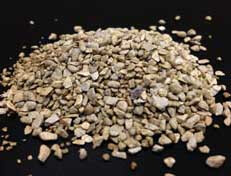
- Modified Surface: Organoclay is made by modifying bentonite clay with quaternary amines. This changes the clay from being water-loving (hydrophilic) to being oil-loving (lipophilic).
- The "Magnet" Effect: The quaternary amines act like a molecular magnet. They have a hydrophilic "tail" that anchors to the clay and a lipophilic "head" that extends outward to attract and lock onto hydrocarbon molecules.
- Non-Swelling Property: Unlike raw bentonite, Ecologix's proprietary MCM-830P is non-swelling. This is critical for a polishing step because it prevents the filter bed from "blinding" (clogging) when it contacts water, maintaining a consistent flow rate.
2. Why it's Used After a Separator
A standard gravity or plate-pack separator can typically reduce oil concentrations to 15-50 ppm (parts per million). However, environmental discharge limits are often much stricter (e.g., 5 ppm or "non-detect").
- Targeting Emulsions: Standard separators struggle with mechanically emulsified oils—tiny droplets (less than 20 microns) created by the shearing force of pumps. Organoclay is specifically engineered to "pull" these droplets out of the water.
- Removing the Sheen: Even at low concentrations, oil can create a rainbow-colored sheen on the water's surface. Organoclay is the "gold standard" for removing this visible sheen.
- High Capacity: Organoclay can absorb 50% to 70% of its own weight in hydrocarbons. This high capacity makes it a cost-effective "final guard" for the system.
3. Organoclay vs. Activated Carbon
While Granular Activated Carbon (GAC) is a common water filter, it is often a poor choice for oil removal when used alone.
- Efficiency: Organoclay removes oil at 700% the rate of activated carbon.
- The "Blinding" Problem: If oil hits activated carbon, it coats the tiny pores of the carbon (blinding it) and makes it useless for removing other dissolved chemicals like benzene or toluene.
- The "Treatment Train: In a professional setup, Organoclay is placed upstream of activated carbon. It acts as a sacrificial layer that removes the oil and grease, allowing the expensive activated carbon to focus on dissolved organics, which extends the carbon's life by up to 500%.
4. System Integration: The AHP-55 Vessel
To implement this polishing step for low flow applications, Ecologix typically utilizes the AHP-55 Liquid Phase Vessel.
- Media Charge: These heavy-gauge steel vessels are charged with 200-250 lbs of MCM-830P media.
- Flow Configuration: The water flows from the OWS into the AHP-55. Because the media is granular, it provides a high surface area for the water to pass through, ensuring maximum contact time between the hydrocarbons and the clay.
- Versatility: This polishing step is effective for a wide range of pollutants, including gasoline, diesel fuel, chlorinated hydrocarbons (PCBs), and even some trace heavy metals.
Benefits of Organoclay
- Reliability: Reduces Total Petroleum Hydrocarbons (TPH) to non-detectable levels.
- Cost-Savings: Protects downstream equipment (like Reverse Osmosis membranes or GAC) from fouling.
- Compliance: Ensures the final effluent meets municipal and federal discharge requirements (NPDES).
Ready to Achieve Compliance?
Ensure your final effluent meets municipal and federal discharge requirements (NPDES).
Contact An EngineerRelated Products

AHP-55 Liquid Phase Vessels
Ecologix AHP-55 Liquid Phase Vessels charged with our OrganoClay media are designed for the removal of free floating oil droplets and sheens in water.

OrganoClay MCM-830P
Ecologix OrganoClay - MCM-830P is a modified clay mineral designed for use as a filter media in process and wastewater treatment. When used alone, OrganoClay removes oil at 700% the rate of activated carbon.